

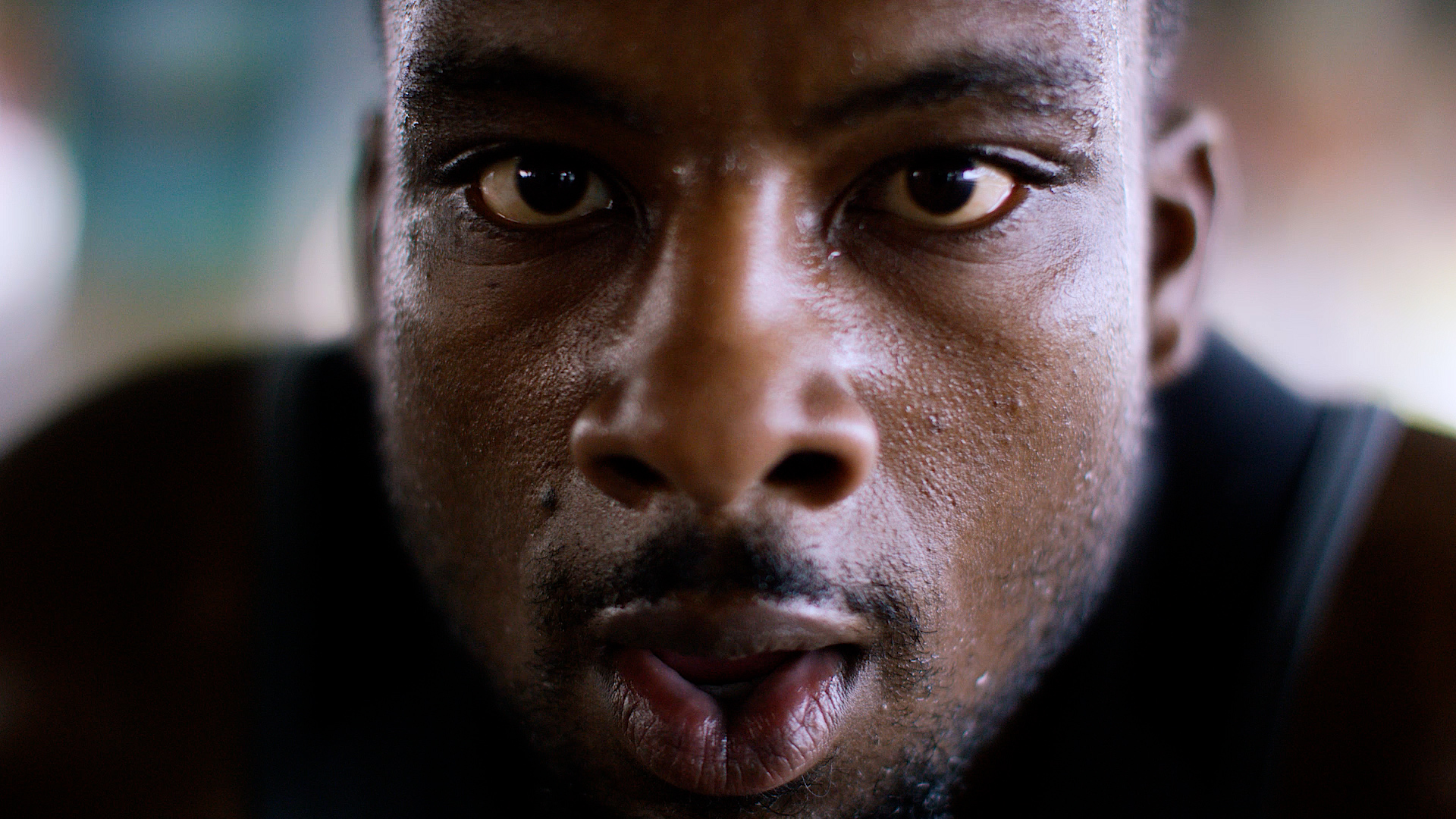
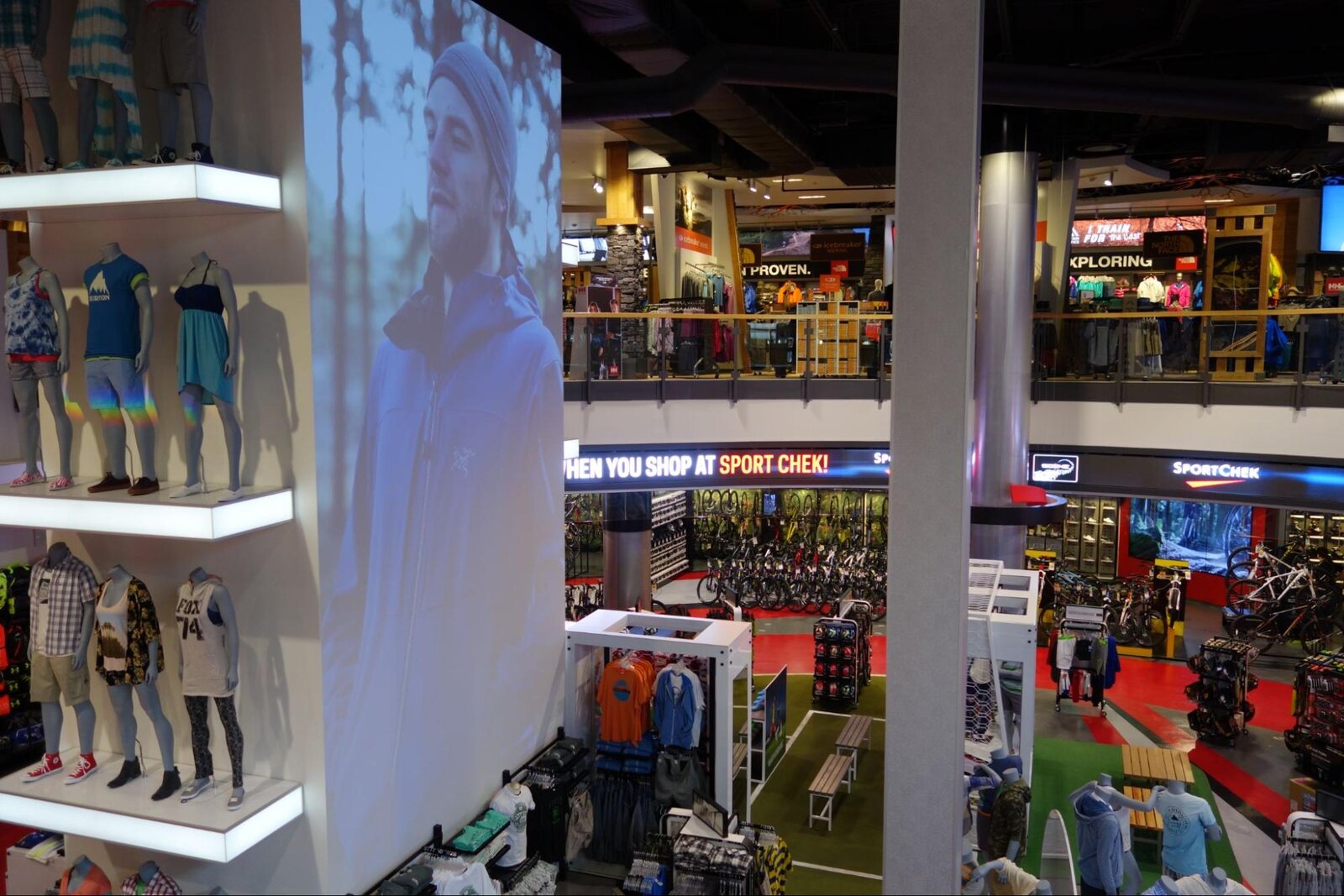
You’re in a giant Sport Chek, wondering if you’re too old to take-up mountain biking. Suddenly the sound system fades out. A dramatic soundtrack takes over and you notice that every display in sight, from the 13” tablets lining merchandise tables, to the 40’ pillar connecting both levels of the store, are playing the same scene. The score intensifies and the screens diversify, now every display seems to be playing different perspectives of the same sports action. Fitness training, soccer, golf, cycling – the focus of the action seems to move across different sections of the store. 20 seconds later, you’re left with the tagline “This is how I train” and a feeling of hyped inspiration (maybe you’ll buy TWO mountain bikes today).
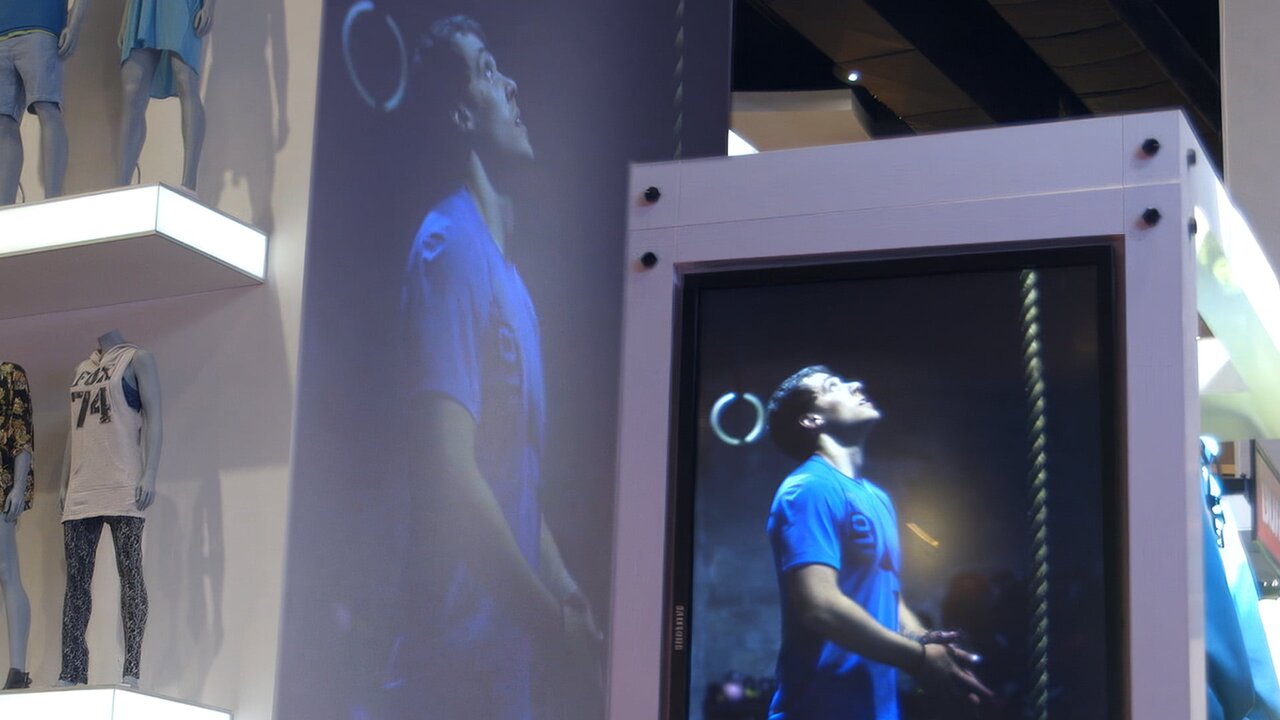
At my last business, we were contracted by FGL Sports (owners of Sport Chek, Canadian Tire) to design, produce, and deliver video content for “unconventionally shaped displays” at their planned flagship stores. Unconventional may have been an understatement, these displays were boldly distinct in their shape, size, and planned use. The company faced a very real content challenge – existing assets from partners (think Nike, Underarmour, etc.) simply weren’t designed for their ambitious vision. They’d have to be stretched, squeezed, shrunk, or awkwardly chunked to fit their canvases. At best they’d feel like a missed opportunity, at worse they’d look like utter garbage.
West Ed
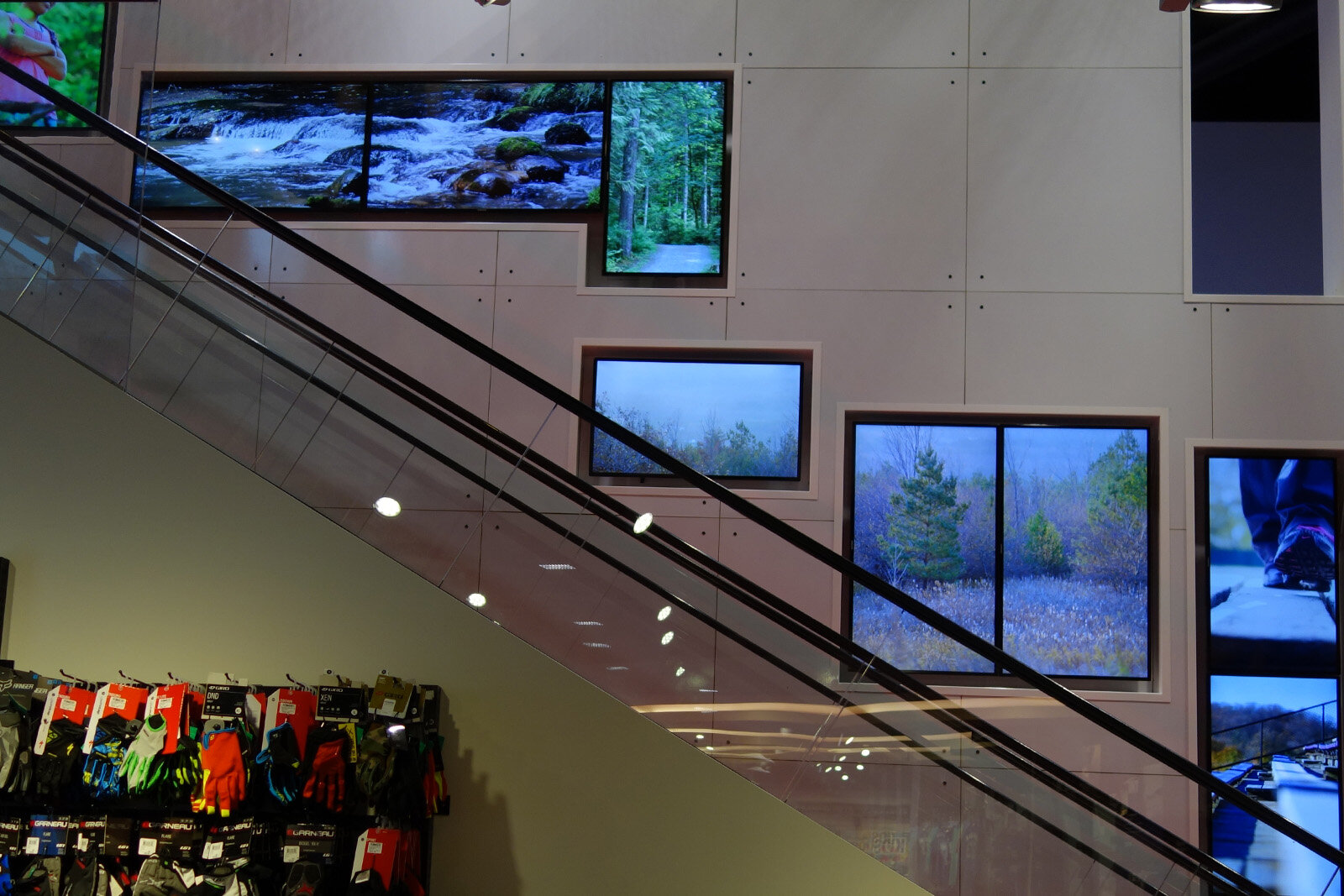
Our first flagship store was West Edmonton Mall – a two story open-floor layout (their outdoor Atmosphere brand took up the entire 2nd level). Screen sizes ranged from 13” tablets to a 40’ column spanning both levels of the store. Display dimensions ranged from basic landscape/portrait, to a 7120×80 ring running the perimeter (like you’d see at a hockey arena), to a 36-screen mosaic alongside the escalator.
Design
Spec wise, we needed to know the size and configuration of the displays, but also things like the dimensions of the mosaics they formed, the pixel densities of each screen, and the bezel or gap between individual display units. This was uniquely challenging given that the flagship store was still being built – all we had to work with were schematics (which thankfully proved accurate).
Once the canvas was understood, we built custom storyboards (to scale) to frame our ideas within the final format. We let the medium guide the design – escalator content would switch from slow-motion ambience (a soccer field, an empty basketball court, etc.) then break into high-paced action footage as each of the 5 zones were motion-triggered by passing guests. Sound would also be reserved for such “active content” states to avoid overwhelming the space (a recurring consideration when designing content for a physical location).
Production
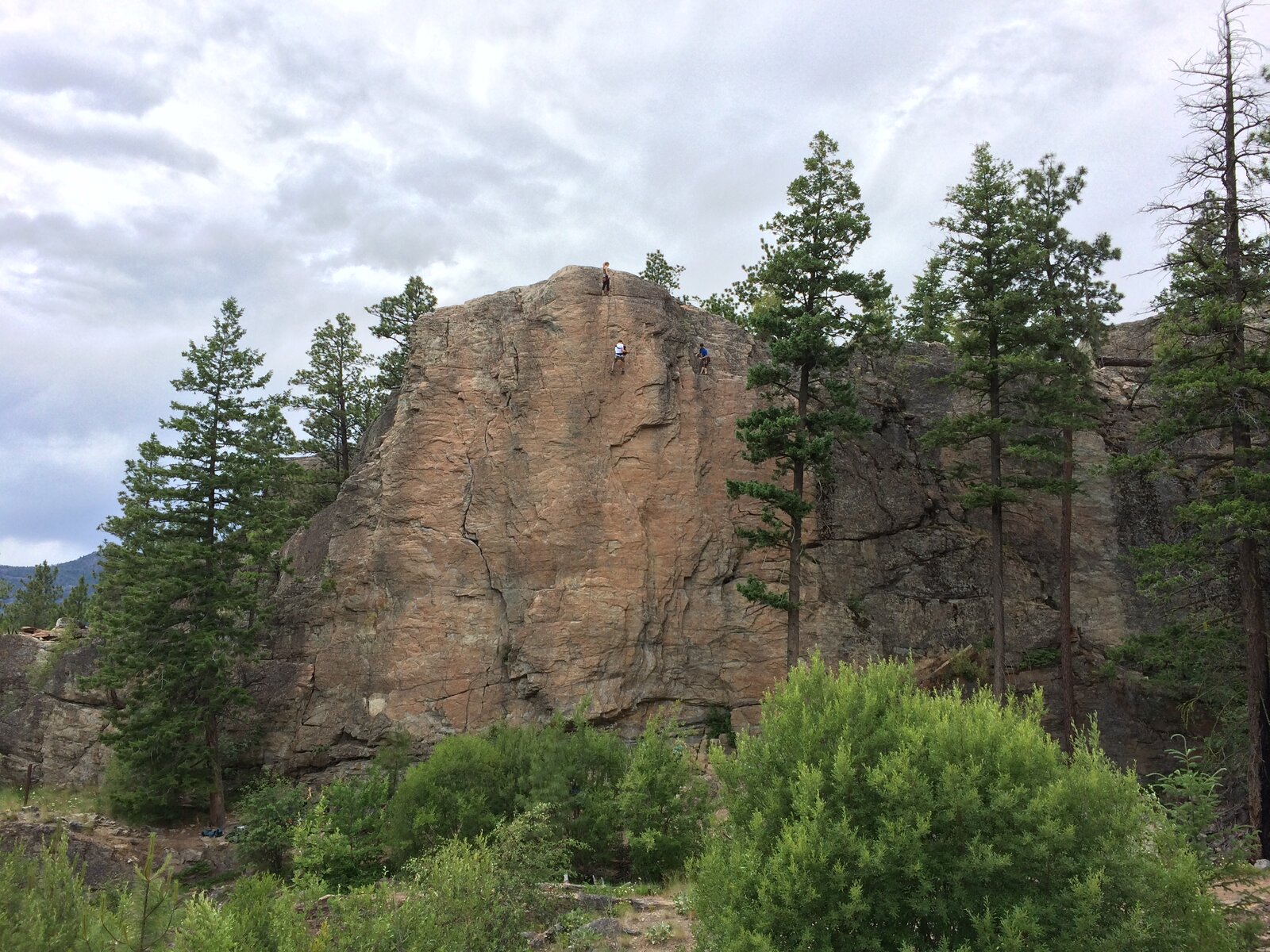
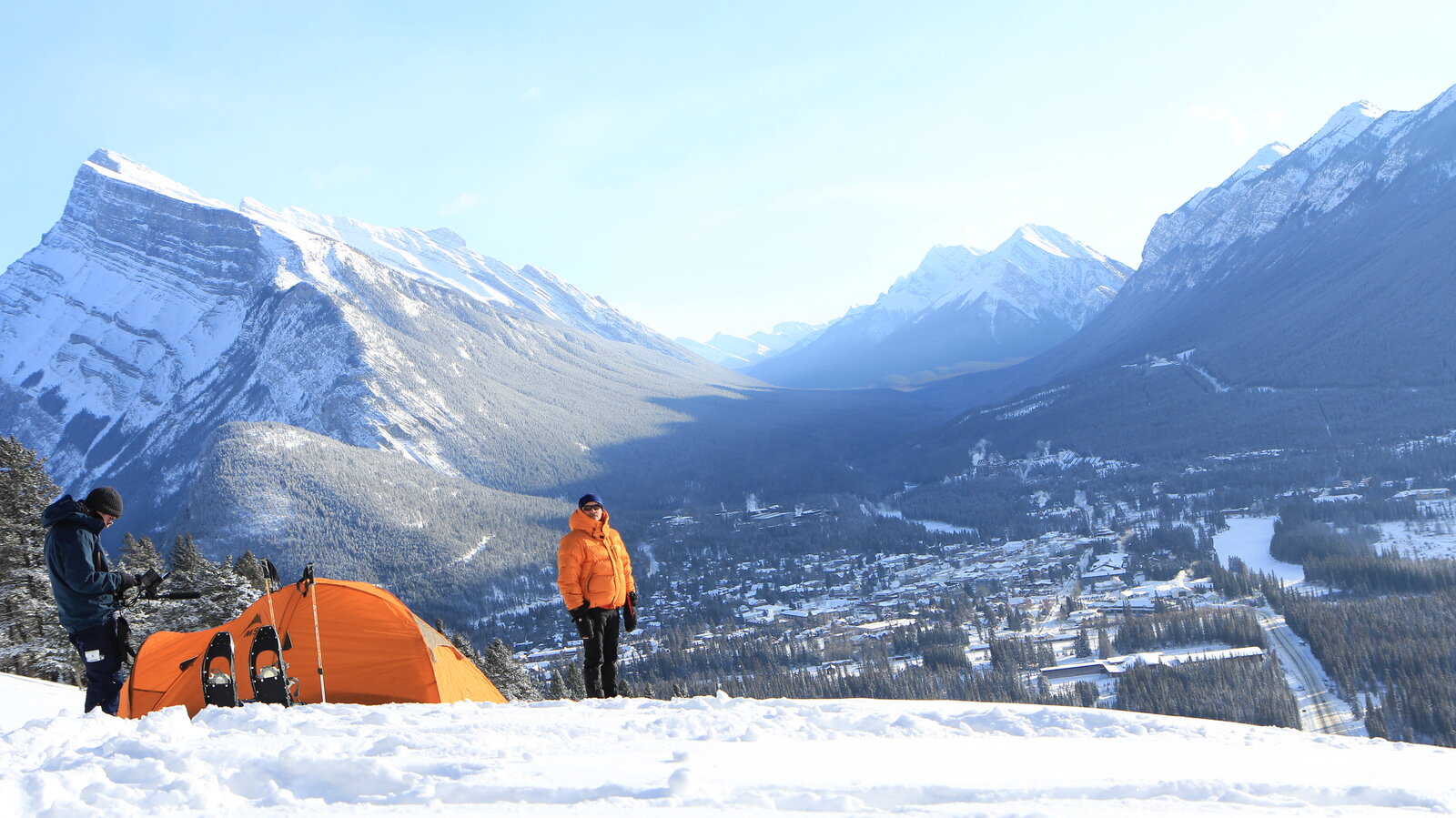
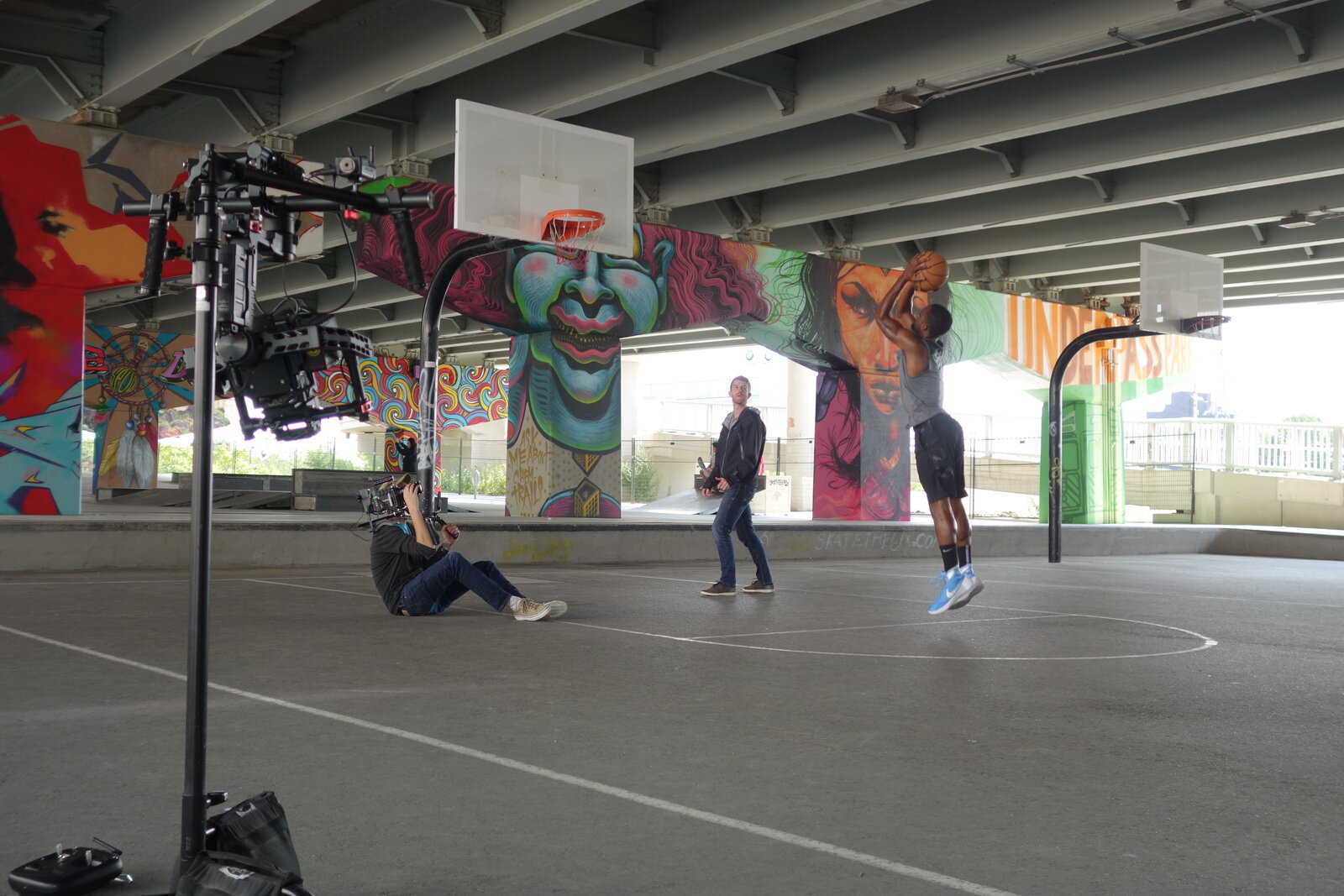
Balancing firepower with agility was the key here. Spanning footage across multiple screens meant that we genuinely needed ultra high resolution video, and combining that with high-frame rates (required for our slow motion scenes) meant some pretty bulky camera gear. But production also required filming in a range of locations that were uniquely difficult to cover (if not hazardous). Rappelling down a cliff face to capture rock climbing, filming a cycling race from a moving vehicle during a thunderstorm, and doing our winter camping segment in what ended up being the coldest day of the year (and one of the worst snowstorms on record) are just a few examples of how the project pushed the team and our gear to its limits.
Post
The post-production stage is definitely where the design and production legwork paid off. Editing a storewide experience required significant hardware and a few unique workflows that pushed the software well past its intended use. Many blood sweat and swears later, I could edit the in-store experience by viewing all of the major display types on single screen (a kind of experiential-multicam view) while keeping the individual assets in sync with each other. The end result was that our client simply had to load each file to the right display (there were dozens) and press play – no need to adjust timing, size, colour, etc. (a benefit to designing content around the final format).
Results
The client was happy (“Looks fan-fricken-tastic”). The anthems, the escalator mosaic, the 40’ pillar, the front window displays – this was clearly a significant hardware investment for Sport Chek, and loading them with content made to their unique configurations was the right move. The in-store brand experience was elevated significantly.
The success of the West Edmonton Mall store led to a multi-year relationship producing content for flagship locations across the country. Below are some highlights from those productions:
Toronto Flagship (tunnel visionaries)
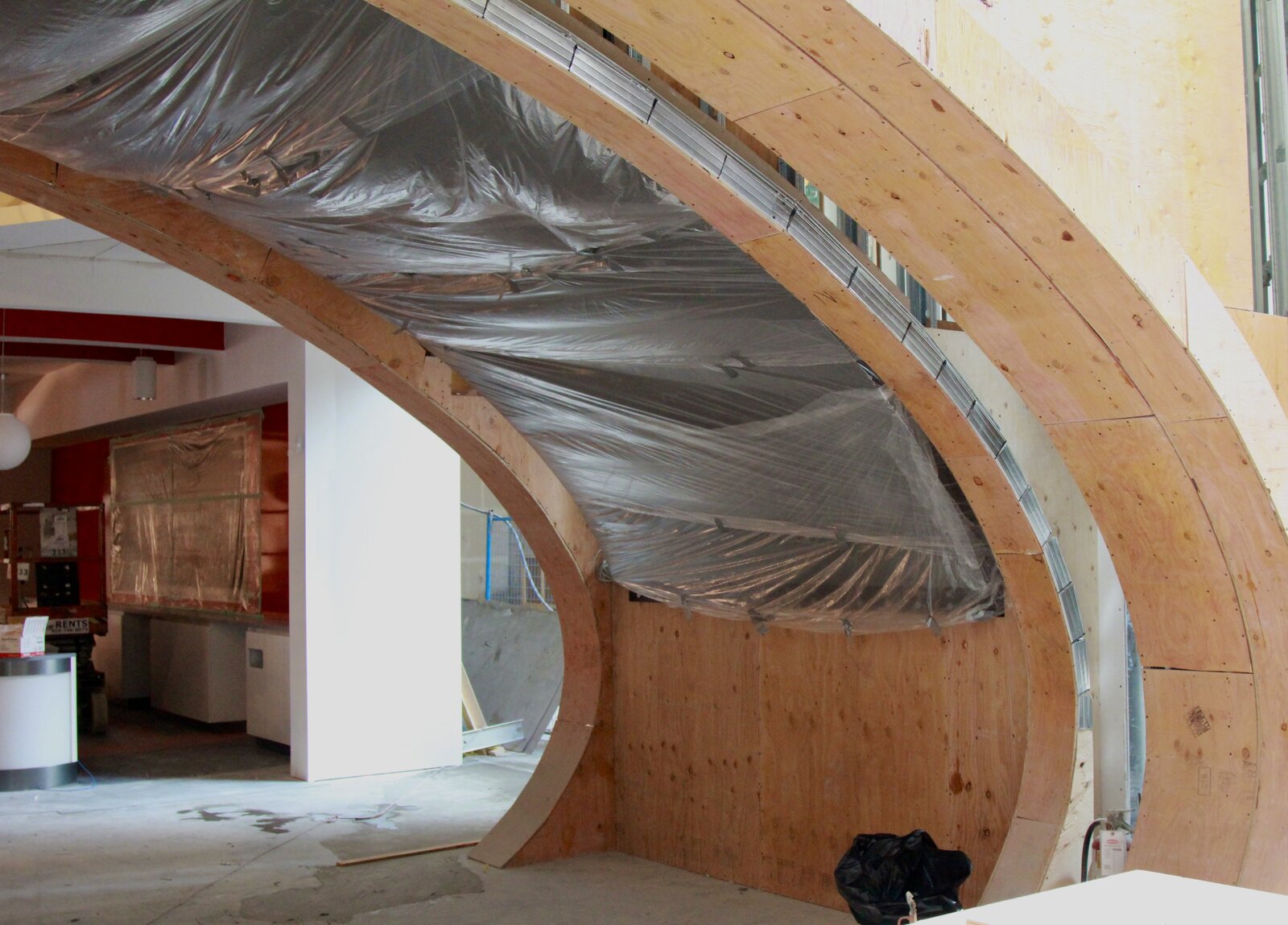
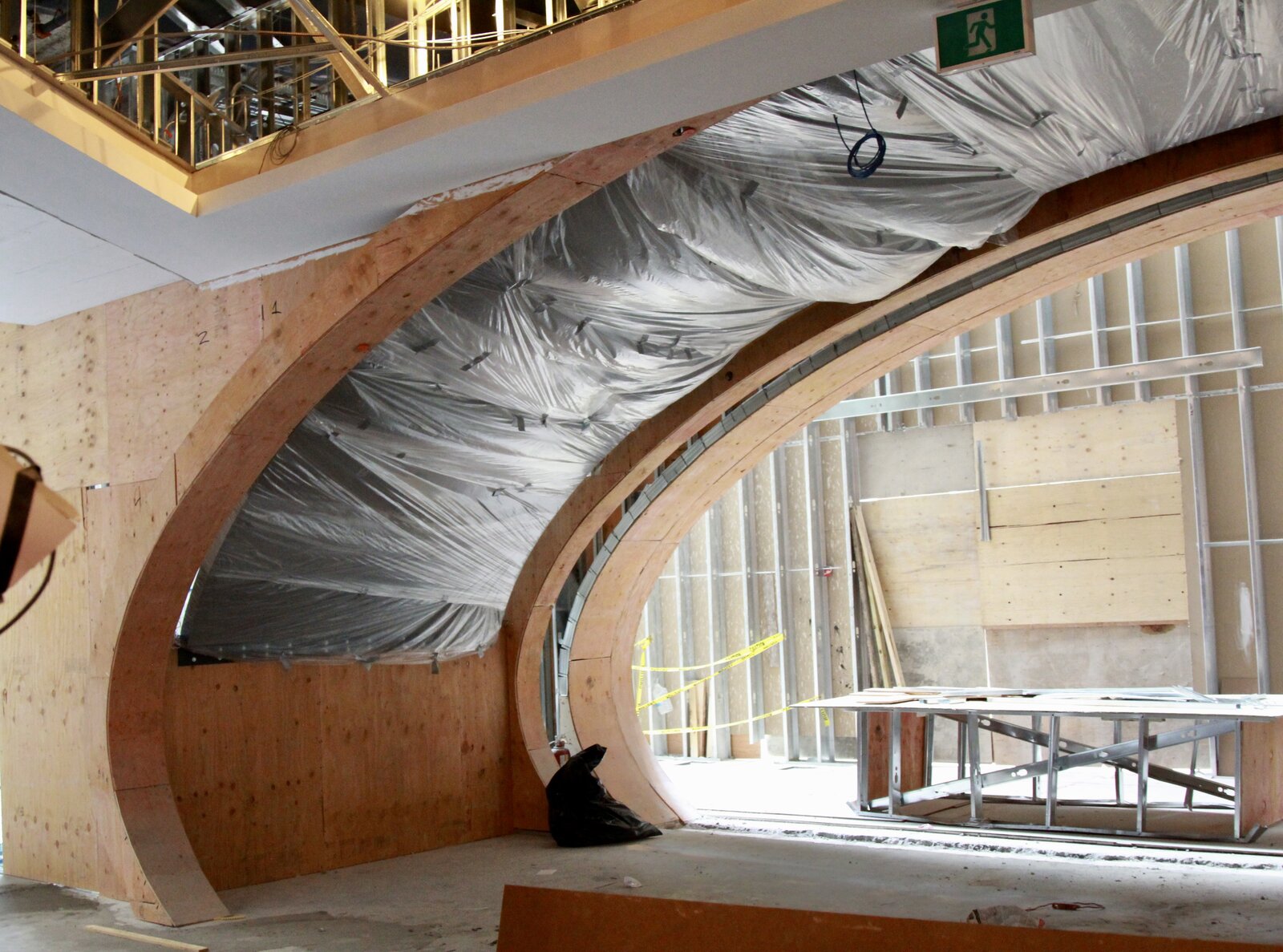
Creating content for a massive digital display spanning the entire ceiling and opposing walls of their flagship store entrances took some real R&D. We tested different compositions and actions with mock videos we created ourselves, basing our designs around the results. The biggest challenges were finding actions that suit the perspective (e.g. following a free throw from player to hoop) and locations that had ceilings interesting enough to carry the setup.
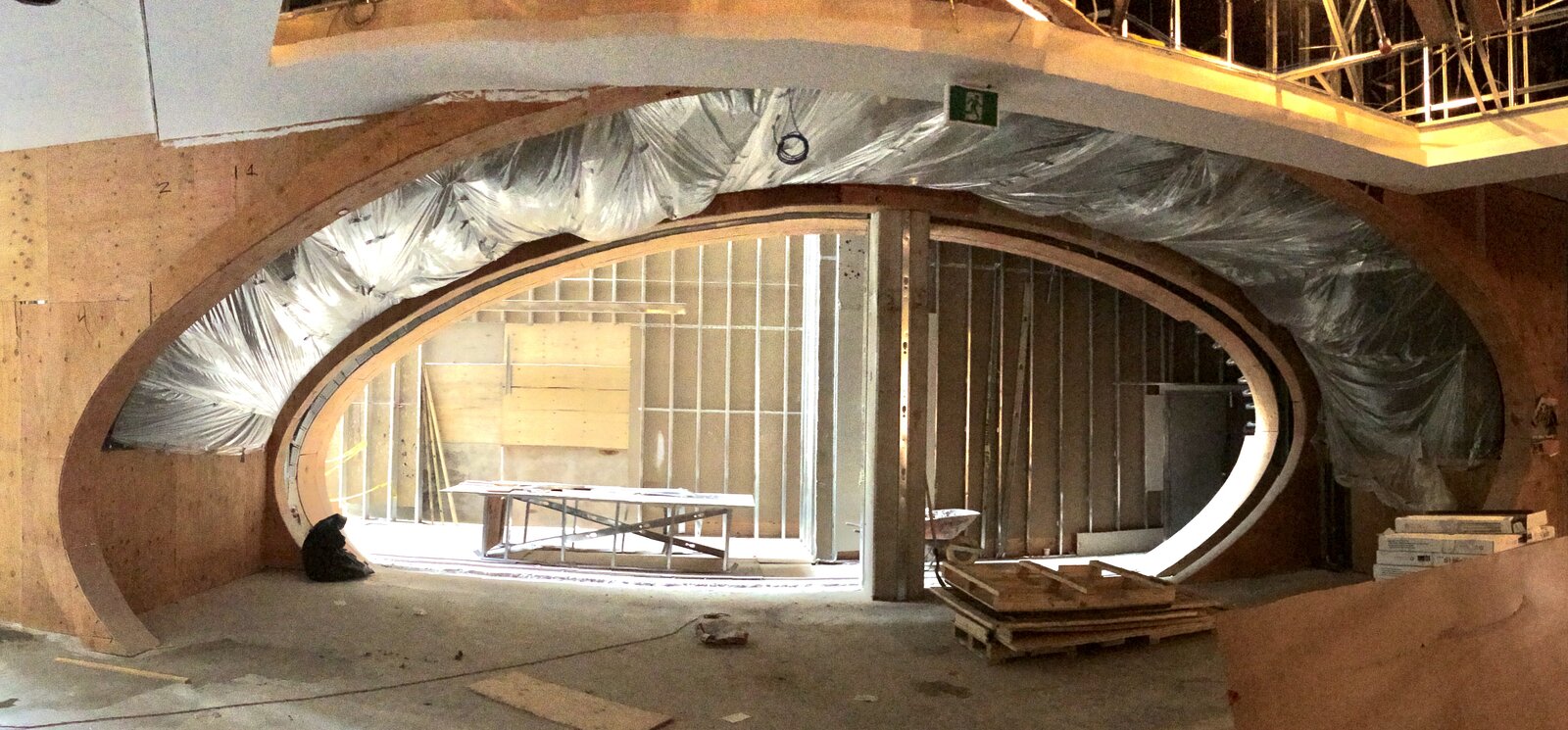
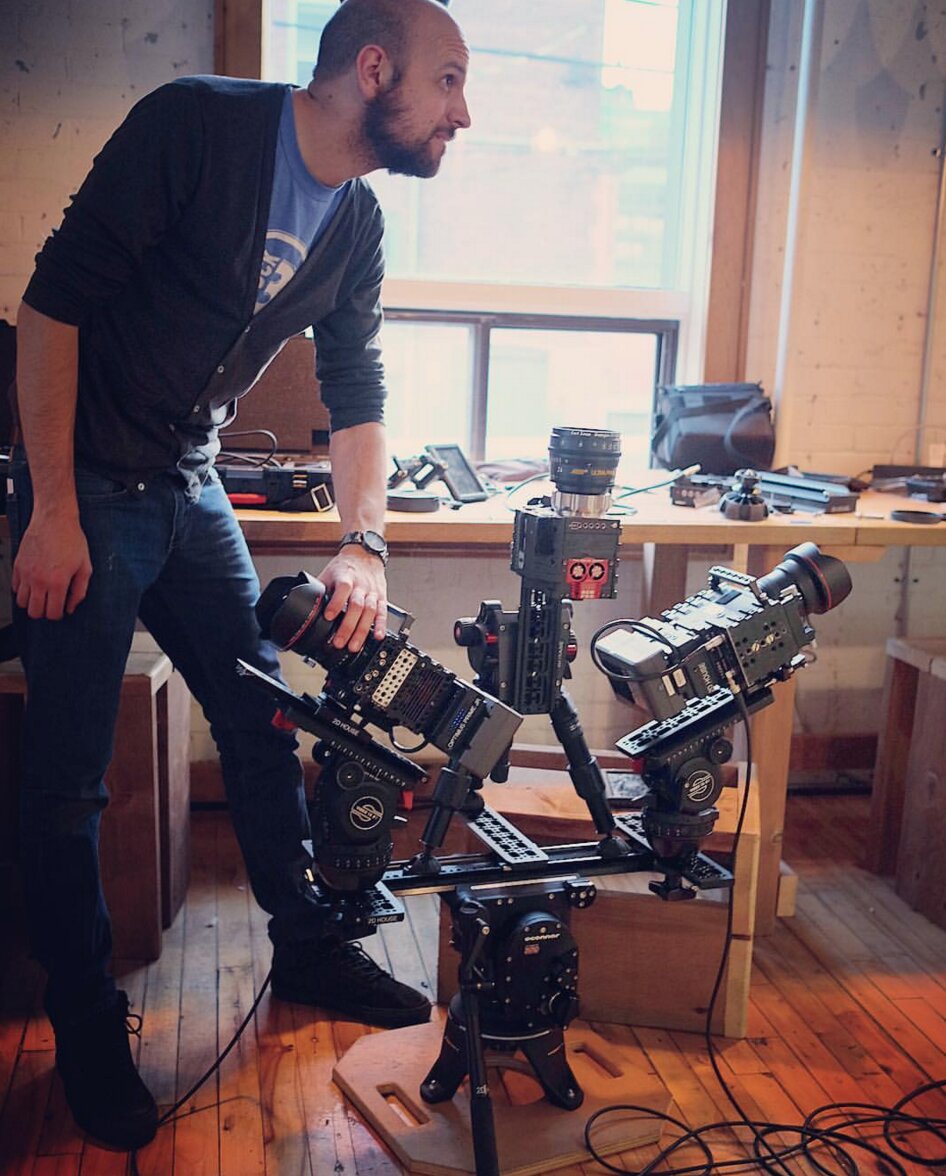
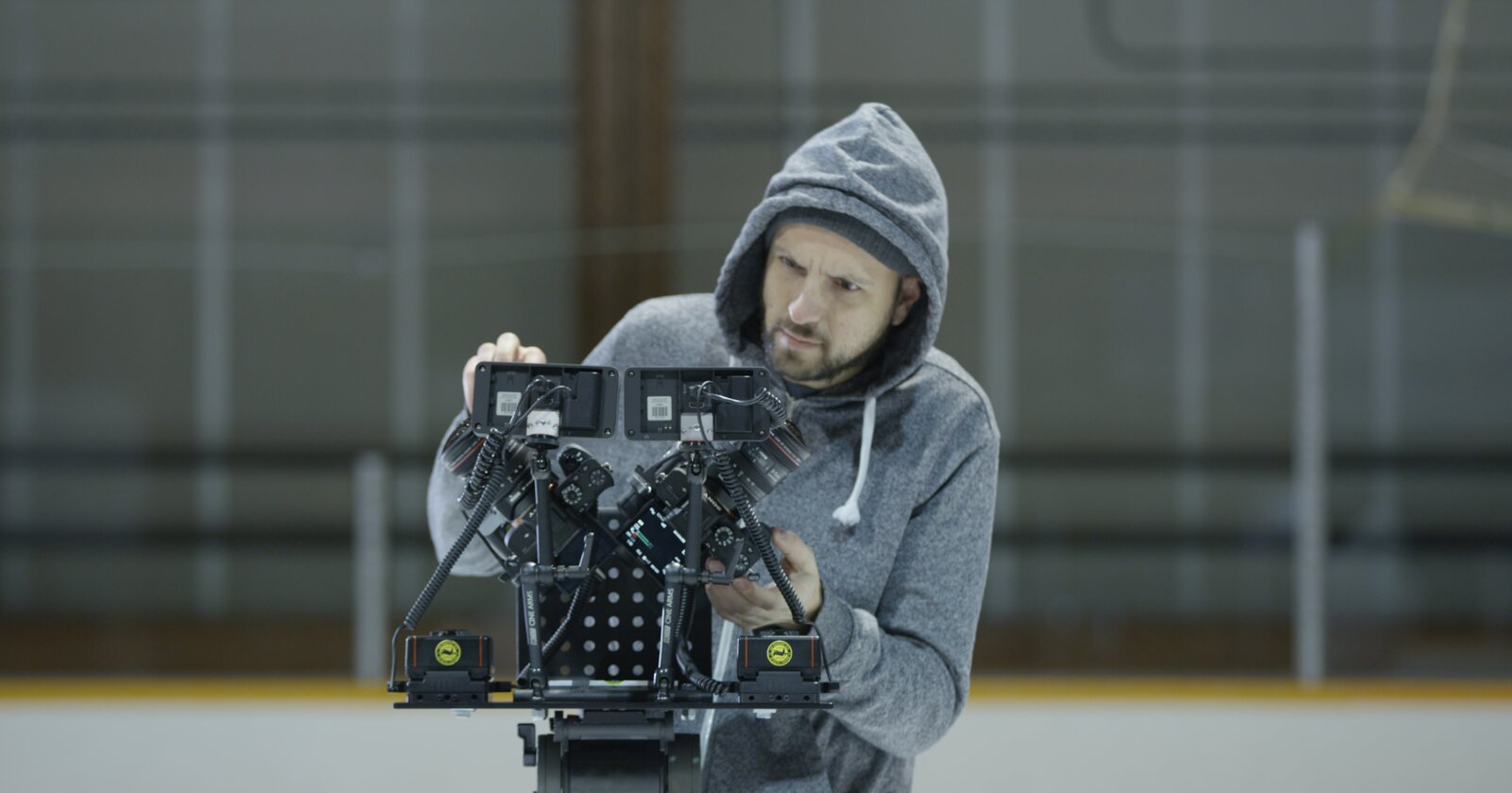
To cover the end-to-end perspective while maximizing image quality, a custom camera rig was required. I spent more hours than I’d like to admit researching camera specs, and building out different configurations until we settled on double-camera setup that could capture 180-270 degrees in non-compressed, ultra-high resolution video (it was fairly lightweight to boot.. as far as custom rigs go).
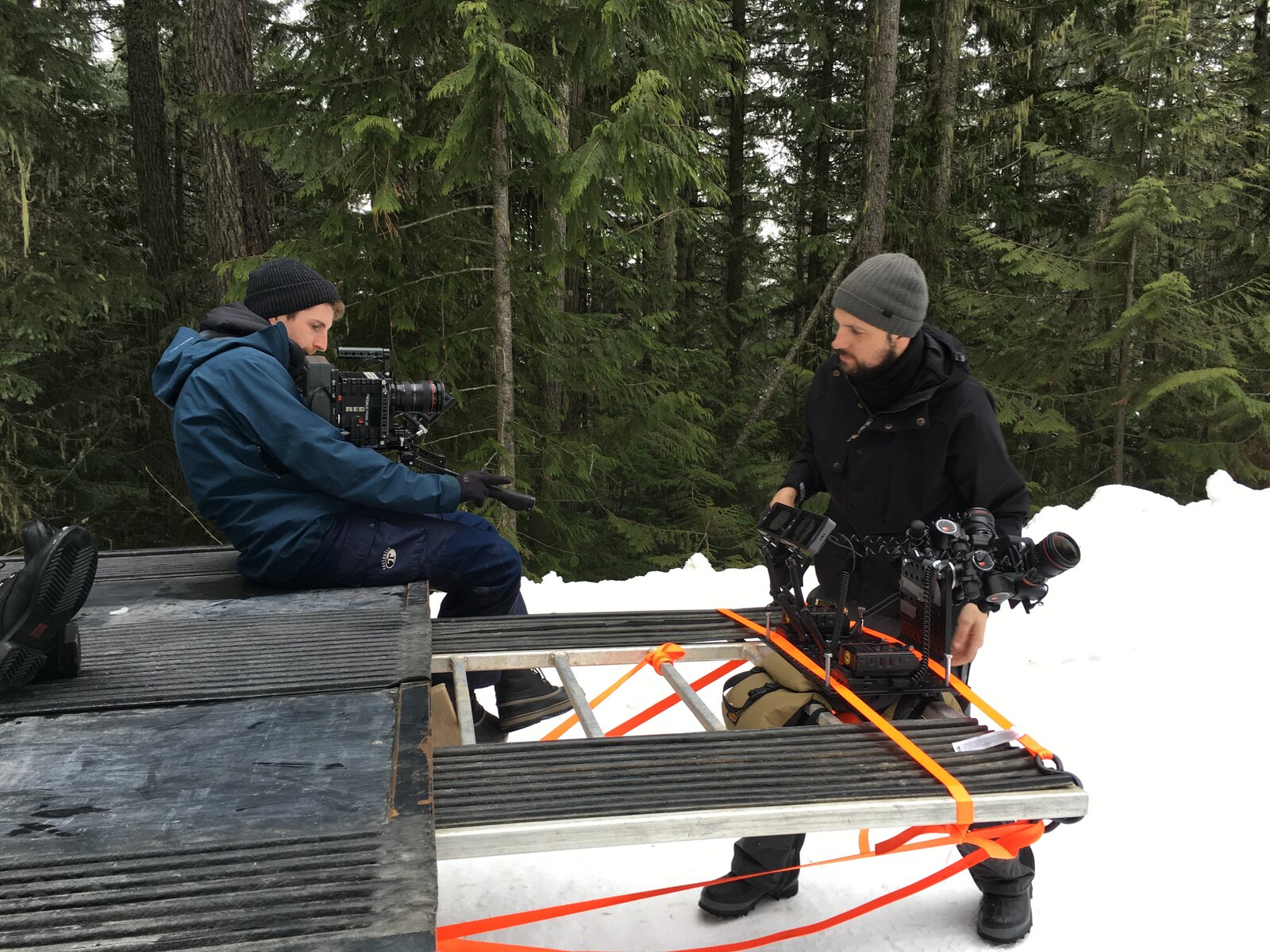
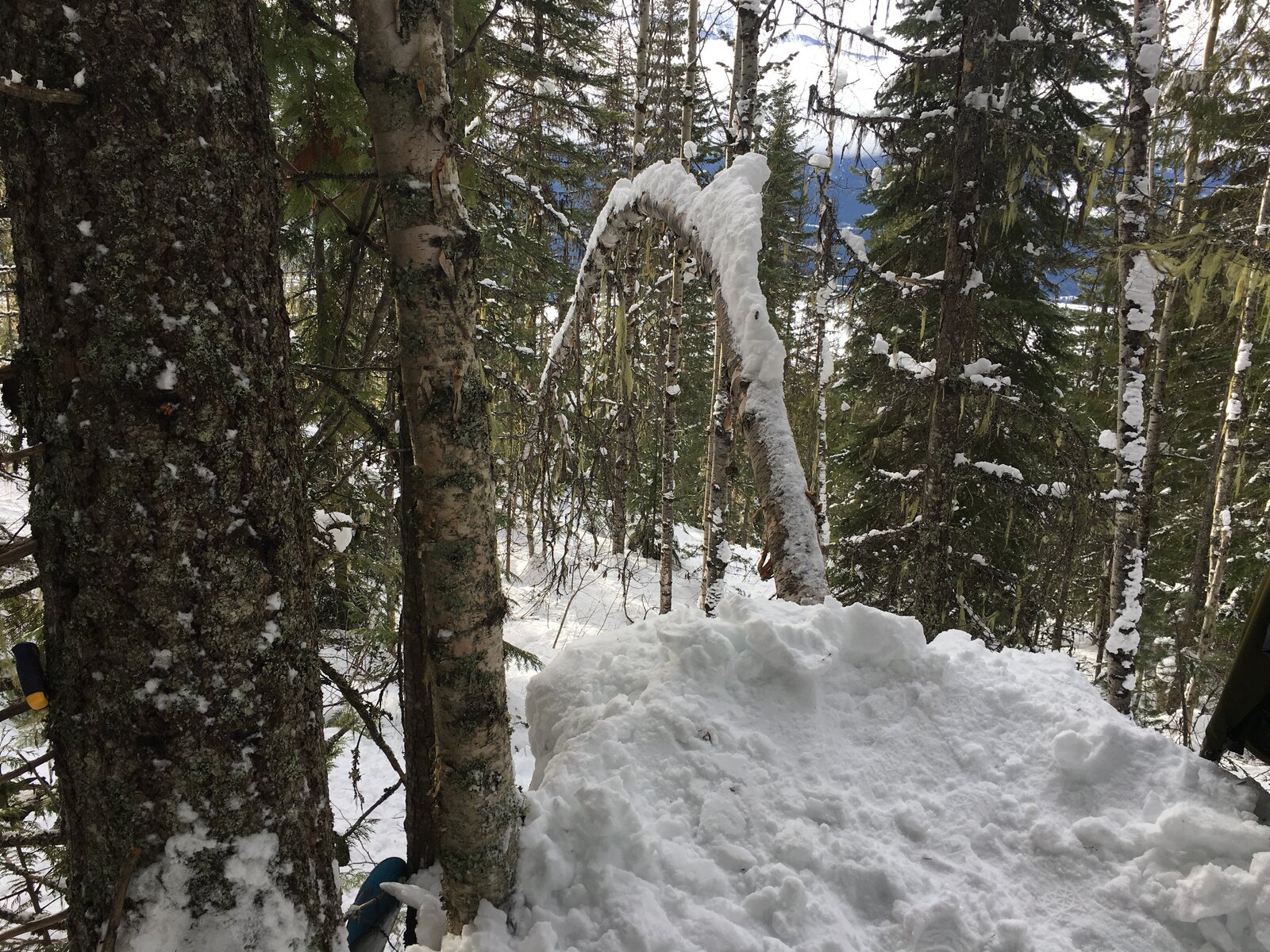
We filmed many different action sports scenes, in many challenging scenarios – my favourite was snowboarding. We lugged heavy gear through deep snow up a mountain then tied down a large tree to create an arc. We set our rig under that and had our snowboarder ride over the feature, capturing it from below – perfect action for the entrance display.
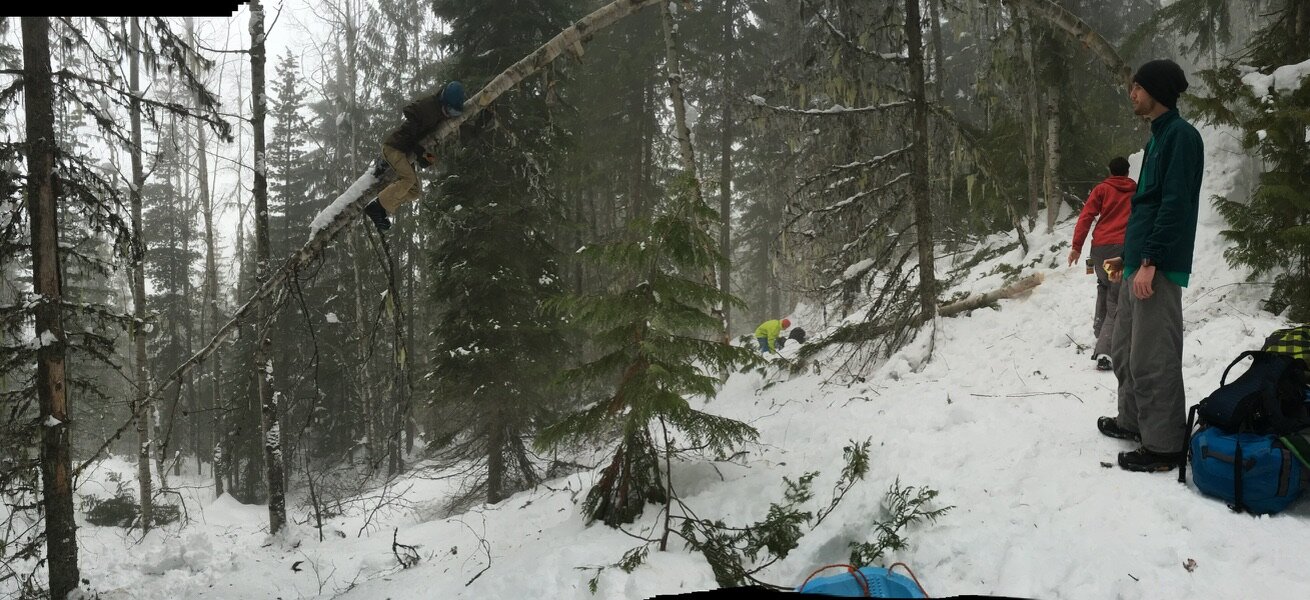
The final result is somewhat difficult to capture instore (the video comp below is my best attempt) but the experience landed both to my eye and based on the reported feedback from customers.
Vancouver Flagship (to the internet and beyond)
This flagship had it’s own unique configurations and content designs – including a three panel video wall that we produced a POV action cam shot for (harder than it sounds at that resolution) to put customers “into the play”.
This was also the first time we designed and produced content for both in-store and online content simultaneously. We were already framing for multiple experiences at once in key shots (the grids on my camera display overlapped so much they looked like a spirograph) and this added a completely new dimension. Thankfully, Vancouver was a smaller flagship overall, and there were a disproportionate amount of portrait-oriented displays (perfect for social).
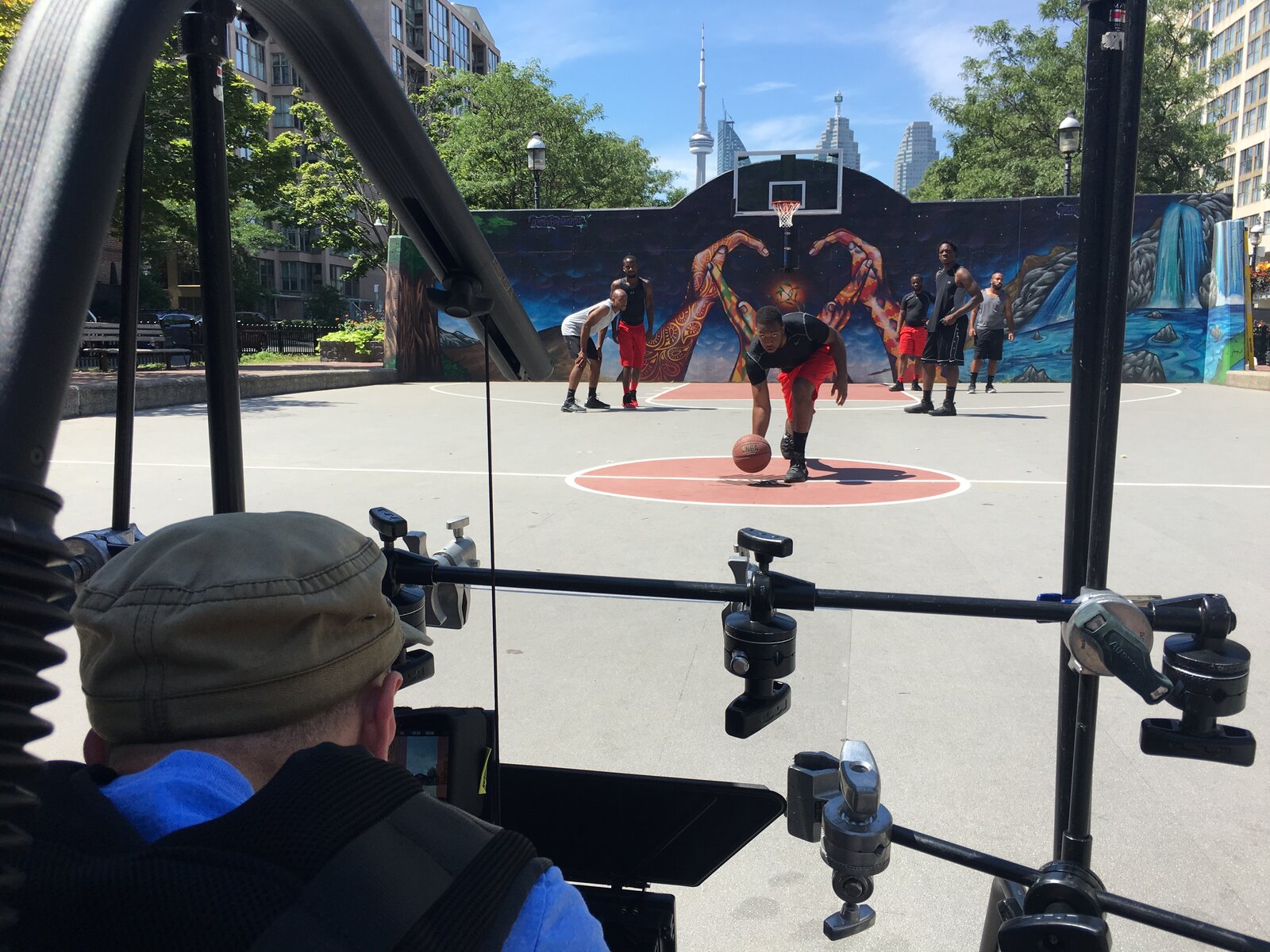
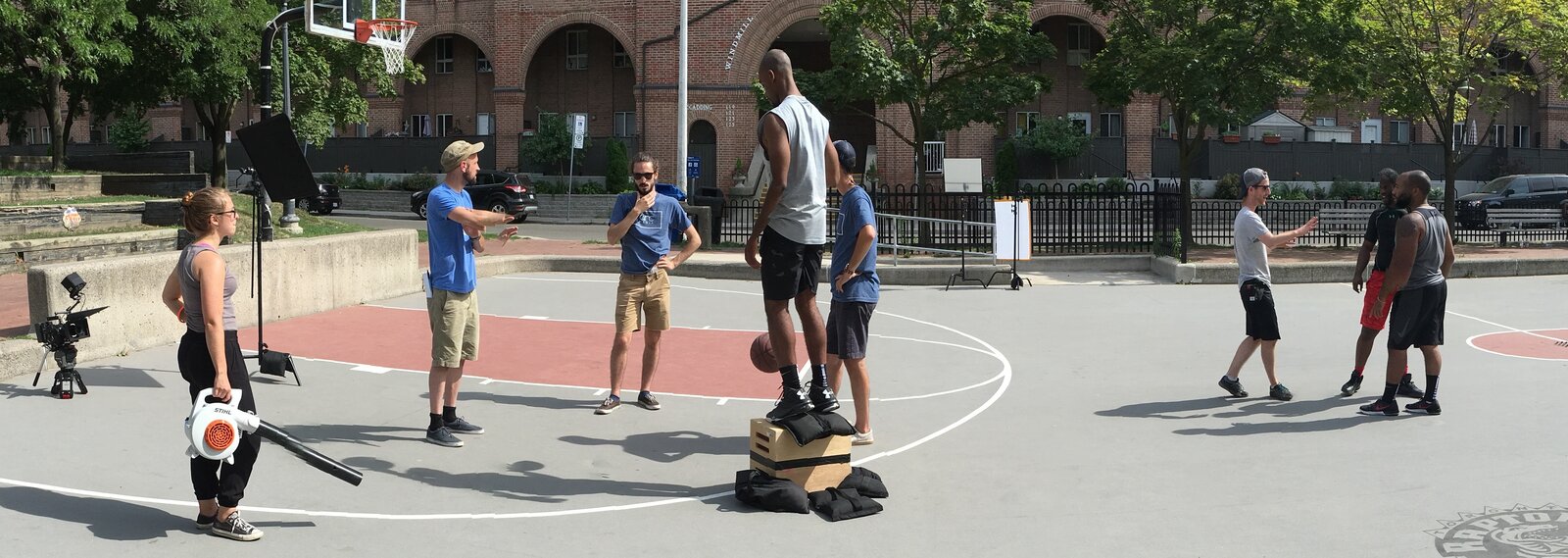
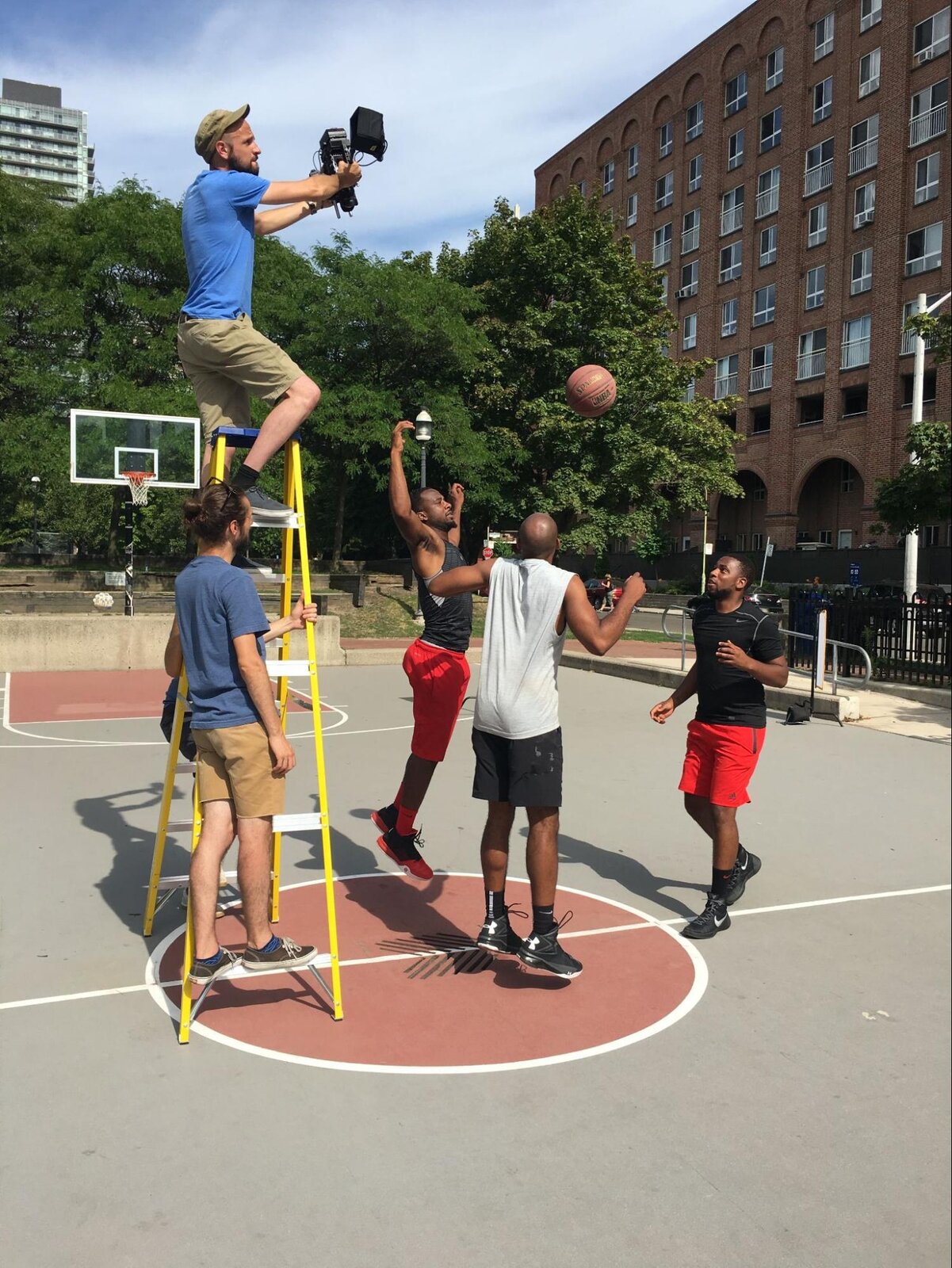
The highlight from this project were the unique designs (we wanted results that could wow on the tiny social screen as much as the big instore one).
Cinemagraphs froze the action in all but one area of the frame (e.g. the wind blowing on a basketball player otherwise hanging in the air mid-shot)
Split Depth Sequences played with borders and split screens to create a sort of “faux 3D” effect, (the black bars were also the perfect canvas for ad copy).
Between the client, the crew, and the creative (to say nothing of the adventure) these projects hold a special place in my memory both professionally and personally.